|
|
|
California National Historic Trail |
|
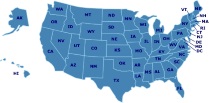
The California Trail carried over 250,000 gold-seekers and farmers to the gold fields and rich farmlands of California during the 1840's and 1850's, the greatest mass migration in American history. Today, more than 1,000 miles of trail ruts and traces can still be seen in the vast undeveloped lands between Casper Wyoming and the West Coast, reminders of the sacrifices, struggles, and triumphs of early American travelers and settlers. More than 240 historic sites along the trail will eventually be available for public use and interpretation. The trail passes through the states of Missouri, Kansas, Nebraska, Colorado, Wyoming, Idaho, Utah, Nevada, Oregon, and California.
|
|
|
|
Crater Lake National Park |
|
Crater Lake is widely known for its intense blue color and spectacular views. During summer, visitors may navigate the Rim Drive around the lake, enjoy boat tours on the lake surface, stay in the historic Crater Lake Lodge, camp at Mazama Village, or hike some of the park's various trails including Mt. Scott at 8,929 ft. Diverse interpretive programs enhance visitors' knowledge and appreciation of this national park, 90% of which is managed as wilderness. The winter brings some of the heaviest snowfall in the country, averaging 533 inches per year. Although park facilities mostly close for this snowy season, visitors may view the lake during fair weather, enjoy cross-country skiing, and participate in weekend snowshoe hikes. |
|
|
|
Oregon Caves National Monument |
|
Oregon Caves National Monument is small in size, 480 acres, but rich in diversity. Above ground, the monument encompasses a remnant old-growth coniferous forest. It harbors a fantastic array of plants, and a Douglas-fir tree with the widest known girth in Oregon. Three hiking trails access this forest. Below ground is an active marble cave created by natural forces over hundreds of thousands of years in one of the world's most diverse geologic realms. The park service provides cave tours for a fee. Located near Caves Junction, Oregon. |
|
|
|
Oregon Coast Aquarium |
|
Located in Newport, the Oregon Coast Aquarium is one of the largest in the country. The Oregon Coast Aquarium exhibits coastal dwellers from the well known to the virtually unknown; in all, nearly 200 species of marine mammals, birds, fish and invertebrates. Encounter sharks, rays, and other denizens of the deep as you immerse yourself in Passages of the Deep, the Aquarium’s 200-foot clear underwater tunnel that snakes through three ocean habitats. With large viewing windows built into the floor, you’ll enjoy nearly 360-degree views of wolf eels, rockfishes, giant octopuses, bat rays and a variety of sharks. |
|
|
|
Oregon Zoo |
|
The Oregon Zoo in Portland is a 64 acre park with about 1,029 specimens representing 200 species of birds, mammals, reptiles, amphibians and invertebrates. Of these, 21 species are endangered and 33 are threatened. The zoo's botanical garden has more than 1,000 species of exotic plants, including Firebird Heliconia, Pelican Flower, Ground Orchid. |
|
|
|
Wildlife Safari |
|
Wildlife Safari, the only drive-thru wild animal park in the Pacific Northwest, is located in Winston. Exotic animals roam freely over 600 acres of grasslands and wooded areas, much as they would in their native habitat, while you the visitor are on safari in your own car. Animals include lions, giraffes, rhinos, and many more. |
|
|
|
|
Arbor Day National Poster Contest |
|
Join over 74,000 fifth grade classrooms and home schools across America in the Arbor Day National Poster Contest. The theme chosen will increase your students’ knowledge of how trees produce and conserve energy. The free Activity Guide includes activities to use with fifth grade students to teach the importance of trees in producing and conserving energy. These activities correlate with National Science and Social Study Standards. The Guide also includes all of the information you need for poster contest participation. |
|
|
|
Kids' Book Project |
|
Kids between the ages of 10 and 14 can submit essays reflecting on the splendor of nature. Winners receive cash prizes and will have their essays published in a book. |
|
|
|
|
|
Apologia publishes several science textbooks that are especially suited to the homeschool environment. They are filled with easy to understand lessons and experiments which can easily be performed at home. The curriculum is also backed by a question/answer support system. This set of textbooks is written under the "Exploring Creation" name. There are three elementary level texts:
Their middle school and high school texts include:
- Exploring Creation With General Science
- Exploring Creation With Physical Science
- Exploring Creation With Biology
- Exploring Creation With Chemistry
- Exploring Creation With Physics
- The Human Body: Fearfully and Wonderfully Made
- Exploring Creation With Marine Biology
- Advanced Chemistry in Creation
- Advanced Physics in Creation
- Plus other texts
|
|
|
|
|
|
Considering God's Creation is a creative in-depth encounter with natural science from a biblical perspective. It is adaptable for grades 2-7. This is a large 272-page book that comes with a Teacher's Manual with audio CD. |
|
|
|
|
Great Science Adventures is a series of books that offer a creative approach to learning science. Each one showcases the series' method of using creative, hands-on activities to enhance exploratory learning. Each book contains 24 lessons, with 2-3 lessons completed each week. The unique format contains activities and basic content appropriate for grades K through 8. Perfect for multilevel teaching or if you want to challenge your advanced students individually. Titles include:
- Discovering the Human Body and Senses
- The World of Tools and Technology
- Discovering Earth's Landforms and Surface Features
- The World of Space
- The World of Insects and Arachnids
- The World of Plants
- The World of Light and Sound
|
|
|
|
|
|
Stratton House sells hands-on science kits with everything you need, including equipment and lessons. They are designed for children in grades 1-8, with the added bonus of allowing different ages to work together. In fact, each kit has enough equipment for two children to share, with extra supplies for additional children available. Subjects covered include astronomy, birds, magnetism, insects, optics, microscope use, and more. |
|
|
|
|
|
|
A History of Science is not a textbook, but is a guide to help parents and children study science through literature. It is intended for children in elementary grades. |
|
|
|
|
|
With Jim Arnosky as your guide, an ordinary hike becomes an eye-opening experience. He'll help you spot a hawk soaring far overhead and note the details of a dragonfly up close. Study the black-and-white drawings -- based on his own field research -- and you'll discover if those tracks in the brush were made by a deer or a fox. In his celebrated style, this author, artist, and naturalist enthusiastically shares a wealth of tips. Jim Arnosky wants you to enjoy watching wildlife. He carefully explains how field marks, shapes, and location give clues for identifying certain plants and animals wherever you are. He gives hints for sharpening observational skills. And he encourages you to draw and record birds, insects, shells, animal tracks, and other finds from a busy day's watch. |
|
|
|
|
CM Nature Walk & Nature Study Group |
|
This group is set up as a resource for enhancing your own Nature Walks and Nature Study activities within your Charlotte Mason homeschool or co-op group. |
|
|
|
|
|
|