Getting Started on Your Homeschool Journey
What's Popular
Educational Service Districts
Oregon Administrative Rules: Division 21 — School Governance and Student Conduct
Homeschooling Laws for Children with Disabilities
Department of Education Information on Home Schooling
Common Questions
Oregon Home School Students Registered by County 1997-1998
Oregon Legislative Action Alert
Guidelines for Home Schooled Students - Students with Disabilities
Homeschool Freedom Alerts
Oregon Services for Home Schooled Students with Disabilities
Oregon Home School Students Registered by County 1998-1999
Beginning to Homeschool
Oregon Home School Students by Age Level
Oregon Home School Data Statistics 2000-2001
Summary of Homeschool Law
Resources

Kingdom of Children : Culture and Controversy in the Homeschooling Movement (Princeton Studies in Cultural Sociology)
More than one million American children are schooled by their parents. As their ranks grow, home schoolers are making headlines by winning national spelling bees and excelling at elite universities. The few studies conducted suggest that homeschooled children are academically successful and remarkably well socialized. Yet we still know little about this alternative to one of society's most fundamental institutions. Beyond a vague notion of children reading around the kitchen table, we don't know what home schooling looks like from the inside.
Sociologist Mitchell Stevens goes behind the scenes of the homeschool movement and into the homes and meetings of home schoolers. What he finds are two very different kinds of home education--one rooted in the liberal alternative school movement of the 1960s and 1970s and one stemming from the Christian day school movement of the same era. Stevens explains how this dual history shapes the meaning and practice of home schooling today. In the process, he introduces us to an unlikely mix of parents (including fundamentalist Protestants, pagans, naturalists, and educational radicals) and notes the core values on which they agree: the sanctity of childhood and the primacy of family in the face of a highly competitive, bureaucratized society.
Kingdom of Children aptly places home schoolers within longer traditions of American social activism. It reveals that home schooling is not a random collection of individuals but an elaborate social movement with its own celebrities, networks, and characteristic lifeways. Stevens shows how home schoolers have built their philosophical and religious convictions into the practical structure of the cause, and documents the political consequences of their success at doing so.
Ultimately, the history of home schooling serves as a parable about the organizational strategies of the progressive left and the religious right since the 1960s.Kingdom of Children shows what happens when progressive ideals meet conventional politics, demonstrates the extraordinary political capacity of conservative Protestantism, and explains the subtle ways in which cultural sensibility shapes social movement outcomes more generally.

Should I Home School?: How to Decide What's Right for You & Your Child
Have questions about homeschooling? This book has the answers. The information in this book will help you decide if homeschooling is right for you and your child.

A Different Kind of Teacher: Solving the Crisis of American Schooling

Homeschool Open House

Dumbing Us Down: The Hidden Curriculum of Compulsory Schooling

Homeschooling: A Patchwork of Days: Share a Day With 30 Homeschooling Families
These writers invite the reader into their homes and advise, "Don't mind the mess." Their passages are often funny and unflinchingly honest. They aren't embarrassed to tell you they whipped out SpaghettiOs for a hurried lunch or stole a peek at CNN while ignoring the chaos in the playroom. Some of the families have created highly structured school environments within their homes, with desks and sharpened pencils. Others promote freestyle learning, with their children sprawled across the house working on projects or reading in between walking the dog, playing games, and riding bikes. The majority of families here live in Pennsylvania, the author's home state, but one writes from as far away as Scotland, another lives on a mountain in Alaska, and yet another checks in from a college town in Texas. Their learning logs, reading lists, and journal entries, along with family photos, help illustrate the book. The quilt they piece together is a great service to those wondering how to approach homeschooling. --Jodi Mailander Farrell

The Homeschooling Revolution

So You're Thinking About Homeschooling: Fifteen Families Show How You Can Do It

They're Your Kids: An Inspirational Journey from Self-Doubter to Home School Advocate
For many people, their schooling was uncomfortable, tedious, and sometimes a waste of time and energy. This book offers the idea that the public school system is tragically flawed and that we are able to do better for our own children. Sam Sorbo, mom of three and wife of actor Kevin Sorbo, took the leap into homeschooling and found the joy and success she was seeking. Included are strategies for working parents, those who are scared to take the leap, and anyone who wants the best for their children.

Homeschoolers' Success Stories : 15 Adults and 12 Young People Share the Impact That Homeschooling Has Made on Their Lives
Each chapter begins with a photo and yearbook-style sketch of the personality, complete with favorite areas of study and a memorable quote. The biographies are short and insightful, with the author often injecting her own thoughts. Dobson, the mother of three homeschooled children, has written numerous books on the topic (The Homeschooling Book of Answers and Homeschooling: The Early Years, among them) and is a news editor and columnist for Home Education Magazine. In her casual, succinct writing style, she brings to life personalities that have little in common beyond their method of education. Some were taught at home completely; others for only a few years. They offer advice, warnings, and fond memories. And their overriding message is that homeschooled people are just as diverse and interesting as the students found in traditional schools. "We are not alone," is the cry heard from these pages. --Jodi Mailander Farrell
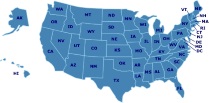
Looking for Another State?
Featured Resources
As an Amazon Associate, we earn from qualifying purchases. We get commissions for purchases made through links on this site.

Pass Your California DMV Test Guaranteed! 50 Real Test Questions! California DMV Handbook

Maria Montessori: Her Life and Work

One Thing at a Time : 100 Simple Ways to Live Clutter-Free Every Day

Freedom and Beyond (Innovators in Education)
